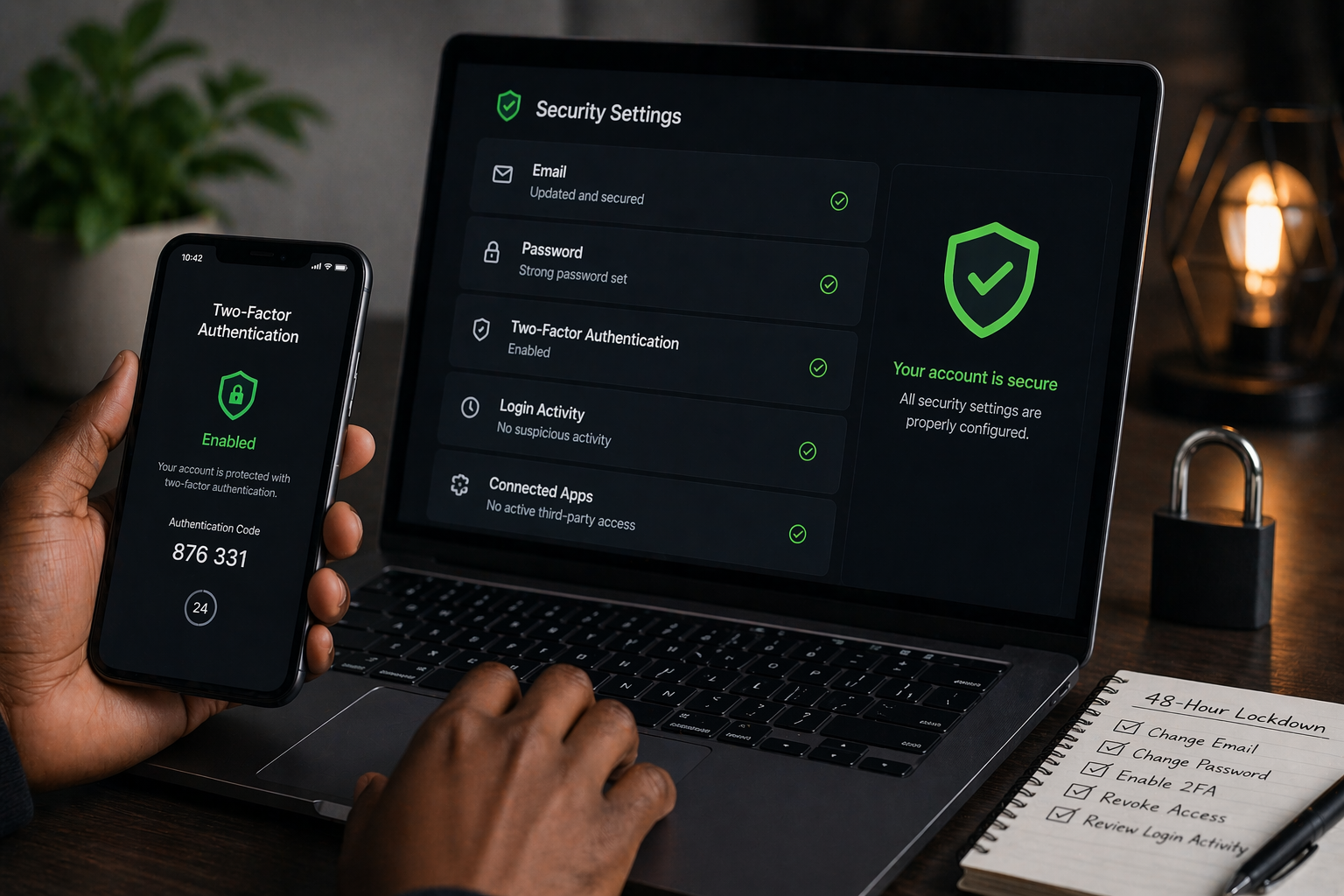
Digital Asset Security 2.0: Protecting Your Bought Accounts from "Original Email" Recovery Scams (2026 Guide)
The year is 2026, and the digital asset marketplace in Nigeria has exploded. Creators, flippers, and brand builders are transacting daily on platforms like JaraGram, exchanging ownership of TikTok accounts, Instagram pages, and X profiles for serious Naira and Dollar equivalents. A well-negotiated flip can net you ₦120,000. A growth-stage TikTok account with 50,000 followers can command ₦350,000 or more.
But there is a dark underbelly to this economy that has burned too many Nigerian buyers: the Original Email (OGE) recovery scam.
Here is the nightmare scenario. You negotiate a deal for a high-value TikTok account. You meet the seller, transfer the funds, and receive the login credentials. You change the password. You link your phone number. You feel secure. Two weeks later, after you have uploaded fresh content and the account is gaining traction, you try to log in. The password is wrong. The email has been changed. The account has vanished back into the seller's hands.
What just happened? The seller used the Original Email Recovery Form to reclaim the account. Because they retained access to the email address that *first* created the account, the platform's trust system sided with them. You did not buy an account. You rented it, and paid a premium for the privilege.
This guide is your security fortress. It details exactly how to sanitize a purchased account in 2026, how to survive the critical "First 48-Hour Lockdown," and how to ensure that when you buy a digital asset, it stays bought.
Understanding the OGE Vulnerability: Why Platforms Trust the Past
To effectively secure an account, you must understand the hierarchy of trust that social media platforms operate on. In 2026, TikTok, Instagram, and X have all upgraded their security AI, but the fundamental logic remains unchanged: the oldest, most consistent data point is the most trusted.
When a seller opens a recovery request claiming their account was "hacked," the platform's automated system looks for deep-rooted evidence of original ownership. This evidence hierarchy typically ranks as follows:
A sophisticated scammer in 2026 does not need to hack you. They simply exercise their Tier 1 rights through the platform's legitimate recovery portal. Your ₦350,000 investment evaporates because you failed to sever these deep-rooted trust links.
The "First 48-Hour Lockdown" Protocol
The moment you receive login credentials for a purchased account, a clock starts ticking. The seller may not reclaim the account immediately. Sophisticated scammers wait days or weeks, allowing you to invest time and content into the asset before pulling the rug. This makes the loss more painful and the account more valuable upon their reclamation.
Your first 48 hours of ownership are critical. This is the sanitization window. During this period, you must overwrite the account's trust anchors with your own data points.
Hour 0-6: The Access Layer Overhaul
Hour 6-24: The "Trusted Devices" Purge Platforms like TikTok and Instagram maintain a list of "Trusted Devices" that can bypass certain security checks. The seller's device is almost certainly on this list.
Hour 24-48: The "Connected Accounts" Severance Sellers often link secondary recovery methods: a backup Instagram account, a Facebook profile, or a Gmail address. These links act as skeleton keys.
Severing the Original Email (OGE): The Nuclear Disarmament
This is the most critical security operation and the one most likely to fail if done incorrectly. Simply adding a new email is not enough. The Original Email retains a permanent trust flag in the platform's backend unless you complete a full email migration process .
The 2026 TikTok Email Migration Protocol:
Instagram Specifics: Instagram allows you to change the primary email more readily, but the account creation email is still logged by Meta. In 2026, Meta's "Your Information" download tool includes the account creation email. Buyers should request this data download as part of due diligence to confirm the OGE before purchase.
Revoking Third-Party App Permissions: Invisible Backdoors
A vastly overlooked security vector in 2026 is the lingering third-party app connection. The seller may have connected the TikTok account to a "Video Editing App," an "Analytics Tool," or a "VPN Service" two years ago. These connected apps often have persistent API access that doesn't reset with a password change.
Failing to revoke these permissions leaves a side door open. A seller with access to a connected analytics dashboard can see your new content activity, and in some poorly secured integrations, can manipulate account settings through the third-party API.
The 2026 Nigerian Marketplace Reality: Scam Red Flags
At JaraGram, we have analyzed hundreds of disputed transactions. Recurring patterns emerge among fraudulent sellers. Look for these red flags before you commit funds.
Post-Sanitization: The 30-Day Trust Rebuild
Even after the First 48-Hour Lockdown, your account remains in a probationary period with the platform's security AI. A sudden, aggressive change in behavior—new device, new location, new content style—can trigger a "Suspicious Activity" flag, locking you out and requiring "Original Ownership" verification that you cannot provide.
The 30-Day Behavior Protocol:
After 30 days of stable, consistent behavior, the platform's security AI begins to trust your access patterns as the "new normal." At this point, your ownership is functionally secure. You have overwritten the historical trust anchors with your own.
Final Call to Action: Security Is Not Optional
The digital asset economy in Nigeria is maturing rapidly. In 2024, you could get away with a casual password change and hope for the best. In 2026, sellers are sophisticated, and platform recovery loopholes are well-documented in scam communities. The buyer who does not follow a structured sanitization protocol is not buying an asset; they are funding a scammer's next deceptive listing.
Bookmark this guide. Follow the First 48-Hour Lockdown Protocol on every single asset you acquire, whether it costs ₦25,000 or ₦500,000. Do not skip the OGE verification. Do not forget the connected apps purge. Your diligence is the difference between building a portfolio of valuable digital assets and funding someone else's.
When transacting on JaraGram Secure Digital Assets Jaragram, prioritize sellers who cooperate fully with the sanitization process. A legitimate seller wants a clean, permanent transfer as much as you do. A resistant one reveals their intentions through their uncooperativeness.
Protect your hustle. Secure your assets. The marketplace rewards the vigilant.
Learn More About Digital Asset Security Best Practices on Jaragram