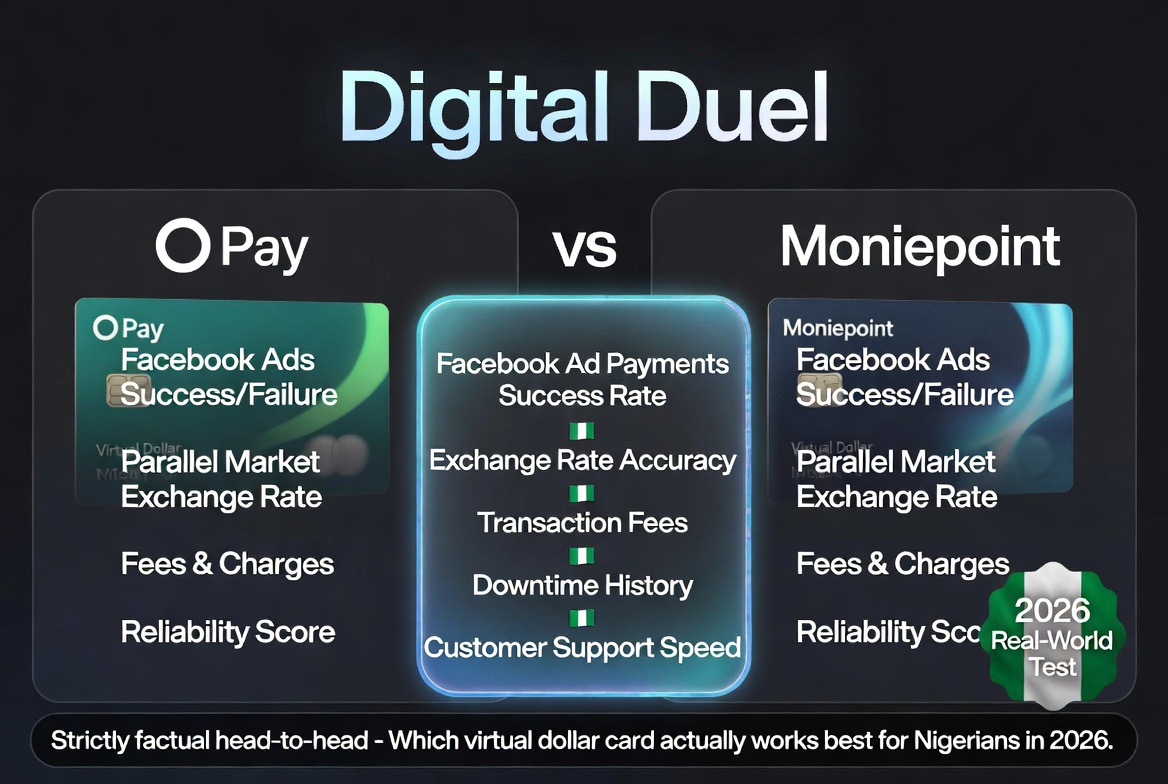
If you’ve tried to link your standard Naira debit card to Netflix or Amazon lately, you know the pain. In 2026, the $20 monthly limit on most local cards has made virtual USD cards a non-negotiable for digital business.
According to recent TechCabal Fintech Reviews, the competition between OPay and Moniepoint has shifted. It’s no longer about who has more agents; it’s about whose virtual card has the highest "Success Rate" on international checkouts.
Step 1: The Facebook Ads Test (Success Rates)
For most Nigerian SMEs, the "Final Boss" of virtual cards is Facebook Ads. Meta is notoriously strict with card bin numbers.
Step 2: Exchange Rates & Fee Transparency
In 2026, the "Parallel Market" rate is what matters. Both apps track this closely, but their fee structures differ.
| Feature | OPay Virtual Card | Moniepoint Virtual Card |
|---|---|---|
| Creation Fee | Free (for first card) | ₦1,000 |
| Exchange Rate | Parallel Market + ₦15 | Parallel Market + ₦10 |
| Transaction Fee | $0.50 flat fee | 1.5% per transaction |
| Maintenance | Zero | ₦50/Month |
Note: Moniepoint generally offers a slightly better exchange rate, making it cheaper for large purchases (over $500). OPay is more cost-effective for smaller, frequent subscriptions like Spotify or Canva due to the zero maintenance fee. To maximize your profit when funding these, check our guide on withdrawing dollars to OPay at the best rates.
Step 3: Alternative Solutions & Backup Plans
Never rely on a single card. If the CBN updates a policy or a provider faces downtime, your business could stall.
If you are just starting and need an account with established trust to avoid "suspicious activity" flags, consider acquiring an aged social media account on Jaragram to link with your new virtual card.
The Final Verdict: Which should you use?
For a broader look at the fintech landscape, see our list of the best apps to make money in Nigeria in 2026.